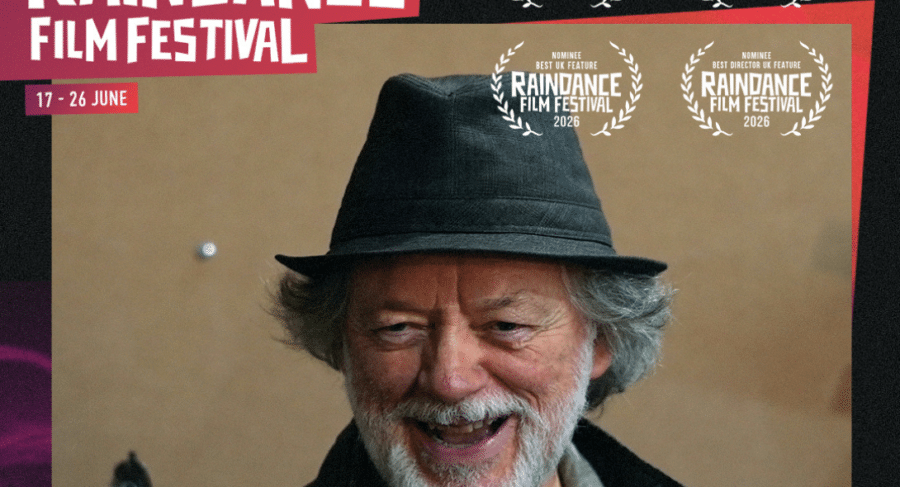
MetFilm School alumni Callum Burn premieres Landship at Raindance Film Festival
By MetFilm School
12 June 2026
We caught up with MetFilm School alumni Callum Burn ahead of his latest film, Landship, screening at this year’s Raindance Film Festival, to discuss his filmmaking journey and the true story behind the project.
A graduate of MetFilm School London’s BA (Hons) Practical Filmmaking (Two-Year) degree, Callum is a writer, director and producer who has built a career creating ambitious historical dramas, including Lancaster Skies and Battle Over Britain.
Set during the Battle of Passchendaele in 1917, Landship follows the nine-man crew of a British tank stranded in No Man’s Land as they fight for survival behind enemy lines.
Callum reflects on his time at MetFilm School, the development of his production company, Tin Hat Productions, and the challenges of bringing an independent war epic to the screen.
You graduated from MetFilm School back in 2013. When you look back now, is there anything from your time there that still sticks with you when you’re making films today?
Looking back, one of the things that sticks in my mind is from the first few weeks at MetFilm School. During those early stages, we were taught how film crews operate and, above all, the professionalism and discipline that are fundamental to a successful shoot. I like to think that my sets are a fun place to work, but that fun has be tempered with a professional work ethic.
You went on to set up Tin Hat Productions with your dad, Andrew, and fellow MetFilm graduate, Sam Parsons. Could you tell us a little more about it and what inspired the idea?
The idea for Tin Hat came about after my Dad, Andrew, came down to visit me when I was studying at MetFilm School back in 2012. My Dad is something of an aficionado of classic British war films, so I took him on a tour of the sound stages at Ealing Studios, where some of those classics were shot back in the day. The Cruel Sea and Went The Day Well? are two that spring to mind. In the days that followed, the nucleus of Tin Hat was formed – a modern production company designed to produce war films with one foot firmly planted in the classics of the past.
What was it about the story behind Landship that made you want to turn it into a film?
The true story behind Landship first came to my attention more than fifteen years ago, thanks to a BBC documentary entitled The First World War From Above. The documentary told of the incredible heroism of the crew and featured an aerial image of the stranded Tank (F41 ‘Fray Bentos’) still stranded in no-man’s land after the war had ended in 1919. The crew would go on to be the most highly decorated Tank crew of the First World War. If ever a story was crying out to be made into a feature film, it was this one.
The tank setting creates a claustrophobic and immersive atmosphere, with the sound design playing a key role in building tension. How did you approach using both the confined space and the film’s soundscape to shape the audience’s experience?
Capturing the claustrophobic nature of tank warfare was always important to us. In pre-production, I worked closely with my father in his role as production designer and, of course, the cinematographer, Sam Parsons. We needed the space to feel tight and uncomfortable, but we also needed it to function safely and comfortably as a ‘workplace’ for actors and crew.
Designing and building the set, therefore, became something of a balancing act in terms of getting the dimensions right. Oversize the set too much, and you risk losing the claustrophobic realism. Stay too close to the true dimensions of an MKIV Tank, and you risk the actors and crew simply not being able to perform their roles.
Of course, lighting the space was also a massive challenge. Fortunately, British Tanks of the period were kitted out with rudimentary electric lighting. The crews were also issued with early battery-operated torches. After a little research, we were able to source some practical lights that closely resembled those used at the time. We also managed to source some period torches, which we converted to run on modern batteries.
On top of that, it must be said that Sam is very skilled at lighting difficult spaces and utilises modern LED’s to great effect. I also have to give Ben Thatcher a mention. As well as writing Landship’s incredible score, he is also responsible for the amazing sound design. This is another fundamental component of the claustrophobic atmosphere. Every sound within the space has to sound as if it is contained within a heavy metal structure, as opposed to the hastily constructed wooden box that the action actually plays out in.

How did you approach casting and working with your actors to shape the tone of the film?
Casting a film is always a challenge. We had somewhere in the region of 4000 actors apply for roles in Landship, and sifting through that many audition tapes is a huge task. At this stage in the process, I am looking at actors who can work together both on screen and off.
Likeability is key for me. Where Landship is concerned, I think we achieved the best dynamic of any cast I have ever worked with. Due to budgetary limitations, it isn’t possible to spend a great deal of time in rehearsal before filming. A thorough read-through is about as much as the purse strings will allow. With Landship, I knew that the scenes involving hand-to-hand fighting were going to be a challenge. I was mindful of the fact that the actors and crew were going to be cold and wet, and wanted to limit the amount of time people stood around feeling uncomfortable.
Consequently, I did set aside some rehearsal time for the action scenes, which ultimately proved useful. During filming itself, I use the time between setups to rehearse and run through certain scenes. This is particularly helpful with scenes where there is a lot of action happening at once – orders being called out, guns being loaded and fired, gears being changed, etc.
Landship is premiering at Raindance Film Festival. How excited are you and the team to see it on the big screen with a festival audience?
I am incredibly excited to have Landship premiere at Raindance. My Dad and I have often joked about our films getting a West End premiere, and it feels a little surreal to think that it is really happening. I don’t think it will really hit me until I’m on the train down to London.

Landship has now been nominated for Best UK Feature, Best Performance in a UK Feature, and Best Director UK Feature at Raindance. What does that recognition mean to you and the team at this stage of the film’s journey?
The nominations are the icing on the cake. The filmmaking process is truly a team effort, and the Best Film nomination is for every single member of the Tin Hat team and everyone who has supported us along the way. For myself, I am deeply flattered to have received a Best Director nomination. To be recognised by a judging panel comprised of individuals who really know their stuff is an incredible honour. I still work out of the same bedroom office at my parents’ house that I have worked in since Tin Hat was conceived. Not much has changed over the last ten years or so, and I still feel like an ‘imposter’ sometimes. It’s good to have your feet on the ground, but it does feel good to be recognised at last.
For current students at MetFilm School who want to make their own features one day, what is one thing you have learned since graduating that you would pass on to them?
First and foremost, the best piece of advice that I can give to students hoping to make features of their own one day is that you don’t need millions of pounds to make a successful film.
Secondly, you may have a great idea for a film, but a script is only as good as the time you put into it. In my experience, you’ll be lucky to have something close to a shooting script by draft number eight. Lastly, spend as much time on the boring admin stuff as you do on exciting creative stuff. You need to be highly organised. Even at the most basic level, filming is expensive. If you turn up on set thinking you can wing it, then you’ll likely run out of money before seeing the job through.
Inspired by Callum’s story?
Discover our BA (Hons) Practical Filmmaking (Two-Year) degree and build creative and technical skills essential to succeed in today’s film, TV, and new media industries.
Come to an Open Day and meet our industry-active lecturers, and find out how you can gain real on-set experience while you study.