What careers can a BA (Hons) Filmmaking degree lead to?
By metfilm school
04 September 2026
Our BA (Hons) Filmmaking degree immerses you in every aspect of the craft, combining creative storytelling with practical production experience. Through hands-on learning, you’ll develop the technical, creative, and collaborative skills needed to begin your career in today’s film and screen industries.
Delivered at our campuses in Berlin, Birmingham, Brighton, London, Leeds and Manchester, the course gives you the opportunity to study in vibrant creative cities while gaining valuable experience in a professional filmmaking environment.
Throughout your degree, you’ll develop specialist filmmaking skills while gaining experience across every stage of the production process. As your knowledge and confidence grow, you’ll be prepared to pursue opportunities in film, television, digital media, and the wider creative industries. By graduation, you’ll have the practical experience and professional understanding needed to take your first steps into a creative career.
Here are some of the graduate career pathways you could pursue with a BA Filmmaking degree.
Lighting Assistant
Lighting assistants help create the visual style and atmosphere of a production by setting up and maintaining lighting equipment. Working closely with the camera and lighting departments, they ensure scenes are lit effectively to support storytelling and create the desired mood.
The role involves preparing and rigging lighting equipment, adjusting lighting between scenes, maintaining equipment, and supporting the wider production team throughout filming.
Students gain practical experience using industry-standard lighting equipment through workshops and collaborative productions, developing the technical knowledge and on-set experience required for entry-level lighting roles.
With experience, Lighting Assistants can progress into roles such as Lighting Technician, Gaffer, and Lighting Director on larger productions.
Junior Editor
Junior editors support the post-production process by organising footage, creating assembly edits, syncing audio, preparing project files, and assisting senior editors throughout the editing workflow. As they gain experience, they take on increasing responsibility for shaping scenes and contributing creatively to the final production.
As they develop their experience, Junior Editors can progress into Editor roles across film, television, digital media, creative agencies, in-house marketing teams, or freelance production.
Throughout the degree, students edit a variety of productions across different genres, refining their technical and creative editing skills while learning professional post-production workflows within a dedicated film school environment.
Production Assistant
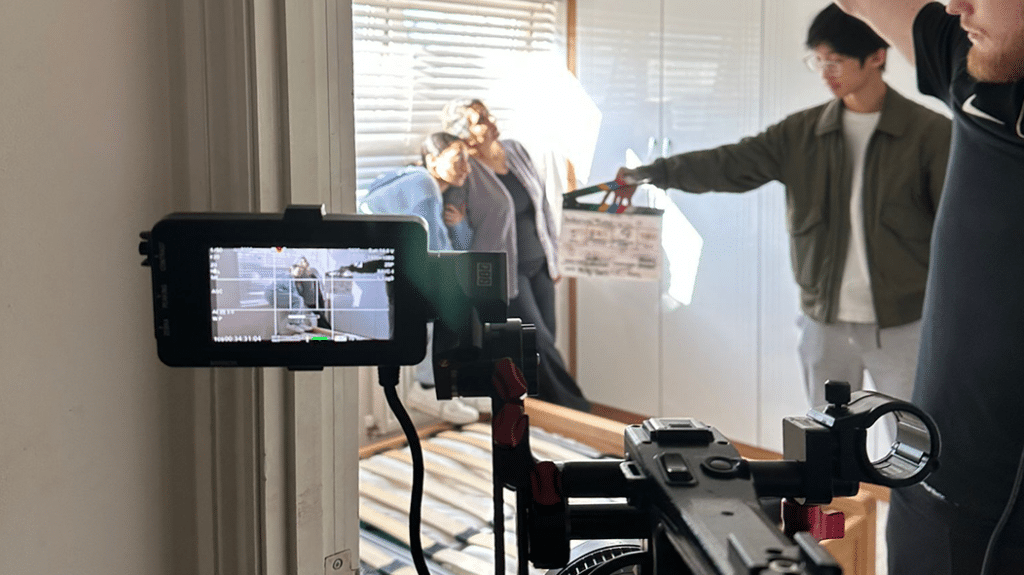
Production assistants (PAs), sometimes known as production runners, provide essential support to film and television productions. They help keep productions running smoothly by assisting with administration, preparing production paperwork, coordinating equipment, supporting cast and crew, and carrying out a variety of practical tasks on set and in production offices.
As one of the most common entry points into the screen industries, the role provides valuable insight into how professional productions operate while helping graduates build industry contacts and practical production experience.
By working collaboratively on multiple productions, students develop the organisation, communication, teamwork, and problem-solving skills needed to succeed in fast-paced production environments.
Read some of the most recent highlights our former students are having in the film industry >
Camera Assistant
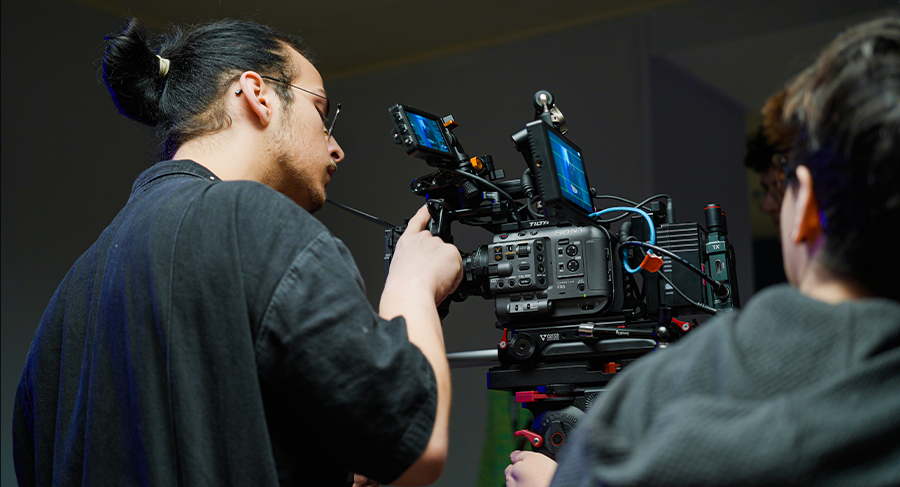
Camera assistants support the camera department throughout every stage of production. Responsibilities include preparing camera equipment, setting up cameras and lenses, maintaining camera logs, organising accessories, monitoring equipment, and assisting the camera crew during filming.
The role is an excellent starting point for graduates interested in camera work and cinematography, providing valuable experience while working alongside experienced professionals.
Students gain extensive hands-on experience using industry-standard film and digital camera equipment across documentary, narrative, music video, and experimental productions. This practical experience builds the technical confidence and production knowledge expected within professional camera departments.
Content Creator
Content creators produce engaging video content for businesses, brands, charities, and organisations across a range of digital platforms. This role combines filmmaking skills with creative communication, requiring an understanding of how to tell engaging stories for different audiences.
This career pathway has become increasingly popular for filmmaking graduates, with opportunities to work in creative agencies, in-house marketing teams, media organisations, on their own YouTube, Instagram and TikTok channels or on a freelance basis.
Through producing short films, documentaries, music videos, and experimental projects, students build a professional portfolio while developing the filming, editing, storytelling, and collaboration skills valued by employers across the creative industries.
Junior Researcher
Junior researchers support the development and production of factual, documentary, and unscripted content, making this a valuable entry point for graduates interested in editorial and production careers across the screen industries. The role involves researching stories, contributors, locations, and subject areas, while supporting production teams throughout the creative process.
The role requires curiosity, strong organisational skills, attention to detail, and a passion for storytelling. Junior Researchers work closely with producers, directors, and editorial teams, helping to develop ideas, gather information, and contribute to the planning and delivery of productions.
Through practical filmmaking projects, you’ll develop the research, communication, and collaboration skills needed to work effectively in professional production environments.
Did you know students who studied our BA Filmmaking course have worked on films such as Star Wars: Episode IX, Knives Out
Where can these roles lead?
Many established creative roles, including Director and Cinematographer, are developed over time as filmmakers build their technical skills, creative voice, professional networks, and industry experience.
Throughout your career journey, entry-level roles provide valuable opportunities to learn from experienced professionals, contribute to productions, and develop the skills needed to progress within the screen industries.
Our BA Filmmaking degree provides you with the practical experience, technical knowledge, and creative confidence to begin your journey into the screen industries. As you continue to develop your skills and experience, these pathways can lead to roles such as Camera Operator, Producer, Editor, Colourist, Cinematographer, or Director.
A collaborative creative community
Filmmaking is a collaborative craft, and throughout the degree you’ll work alongside fellow creatives to bring productions to life. Whether you’re developing short films, documentaries, music videos, or experimental projects, you’ll gain first-hand experience of working as part of a professional production team.
This collaborative approach reflects the realities of the screen industries, where filmmakers work closely with specialists across directing, cinematography, production design, sound, hair and make-up, and business.
For example, at our Brighton campus, you’ll have opportunities to collaborate with students from BA Hair and Make-up for Media and Performance, BA Production Design, and BA Film Business. By working on productions together, you’ll strengthen your communication skills, expand your professional network, build your portfolio, and graduate with valuable experience of collaborative filmmaking.
Craig Ennis, Course Leader for BA Filmmaking at our Brighton campus, says:
“Our BA Filmmaking course provides students with a broad foundation across all major areas of film and media production in the first year, before allowing them to develop specialist expertise in their chosen production roles during the second and third years.
Students gain extensive hands-on experience learning equipment and creative processes while developing the collaboration, communication, creative thinking, and problem-solving skills that are essential in professional production environments.
Alongside the practicalities of filmmaking, we place a strong emphasis on personal and professional development, helping students identify career pathways and align their skills, interests, and values with opportunities in the creative industries.”
Ready to join us?
Feeling inspired? Discover MetFilm School’s practical courses and find the path that’s right for you. Join us at one of our upcoming Open Days to see where your filmmaking journey begins.
Get in touch with our Admissions Team to discuss your options and find out more about our available BA degrees:
- Phone: 01273 096406
- Email: admissions@metfilm.ac.uk