MA Directing graduate Hareekesh Anilkumar on the success of The Moon Under Water
By Metfilm School
19 June 2026
For Hareekesh Anilkumar, completing his MA in Directing at MetFilm School London came with an impressive milestone: the success of his final project, The Moon Under Water. After completing his undergraduate studies in India, Hareekesh joined MetFilm School, where he developed the sci-fi romance that would go on to earn international recognition.
Selected from more than 12,000 entries worldwide, The Moon Under Water was named Runner-Up in the Best English Short Film category at the ZEE Short Film Contest 2026, placing it among the competition’s top three finalists. The film has also been selected for acquisition by ZEE5, one of India’s leading OTT streaming platforms.
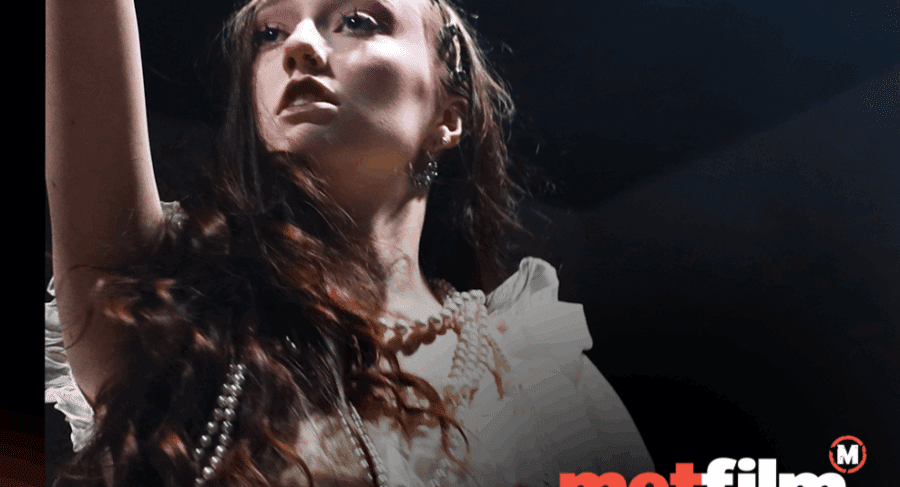
A sci-fi romance exploring love, grief, memory, and the relationship between humanity and technology, The Moon Under Water follows Willow, a woman who is given an unexpected opportunity to reconnect with her late husband through an advanced humanoid AI, forcing her to revisit a past she thought she had left behind.
We spoke to Hareekesh about his journey, the inspiration behind the film, its success, and the collaborative production process behind The Moon Under Water.
Could you tell us a little about yourself and what first inspired you to pursue directing as a career?
That’s actually a difficult question to answer. At this point in my life, nothing makes me feel more alive than creating something new and seeing it come to life on screen. There is a deep sense of fulfilment that comes from building a world, creating characters, and watching them evolve from an idea in my head into living, breathing people through the performances of actors.
What draws me to directing is that it sits at the intersection of so many art forms: writing, performance, cinematography, music, and design. It allows me to bring all of those elements together in service of a story. Filmmaking has also helped me grow as a person. Every project teaches me something new about people, relationships, and myself, which is one of the reasons I continue to be drawn to it.
Looking back on your time at MetFilm School, what would you say was the most important lesson or experience that shaped you as a filmmaker?
One of the biggest lessons I learned at MetFilm School was that filmmaking is ultimately the application of life skills. While people often focus on what happens on set, I came to realise that the real work happens in pre-production and post-production. By the time you reach the shoot, directing largely becomes an exercise in problem-solving through critical thinking, creative thinking, and decision-making. The more effort you invest in preparation, the smoother the production and post-production process becomes.
I learned this lesson the hard way by encountering every kind of challenge imaginable across pre-production, production, and post-production. Looking back, I’m grateful that MetFilm School gave me the freedom to make mistakes, learn from them, and grow through the process.
Another important lesson was understanding that a director’s primary responsibility is to work with actors. Building trust, creating a collaborative environment, and helping actors bring their best work to the screen is at the heart of directing. The Moon Under Water became a stronger film because of the contributions of its cast, and I remain deeply grateful to my batchmates, who were the actors in the film: Ben Lonergan, Tina Schei, Daniel Roemer, and Jasmine Mitchell, for the insight, creativity, and authenticity they brought to their performances.
Let’s talk about The Moon Under Water. Where did the original idea for the film come from?
The Moon Under Water began during a period when I was actively searching for an idea for my final film. For months, I explored different concepts, but none of them felt authentic. I didn’t want to make a film simply for the sake of completing a school project. I wanted to use the opportunity to tell a story that meant something to me personally.
That process led me to an important realisation: the most authentic stories often emerge from our own experiences and emotions. I took something I was going through at the time and reimagined it through a completely fictional lens, building a world, characters, and a narrative around it. The result was The Moon Under Water, a sci-fi romance that uses technology as a backdrop to explore love, loss, grief, and letting go.
The film would not have become what it is without the contribution of my writer and fellow MetFilm student, Maddy. She brought tremendous depth and humanity to the characters and screenplay, work that was later recognised with the Best Screenplay (Student Film) award at the 14th Mumbai Shorts International Film Festival.

You made The Moon Under Water as your final project for the MA Directing programme at MetFilm School. Can you talk us through the experience of making it and what the production process was like for you?
Making The Moon Under Water was one of the most challenging and rewarding experiences of my filmmaking journey. Bringing the project together required me to think creatively, not just as a director, but also as a producer and problem-solver. While assembling the team, I collaborated with talented people from different backgrounds, including long-time creative partners from India and several BA students who played important roles in the production.
I was also fortunate to have an incredible First AD, Alena Mucenieks, whose support was invaluable throughout the shoot. From helping coordinate production to securing one of our key locations, she played a major role in making the film possible.
The challenges continued in post-production, where technical setbacks, software issues, and lost audio files forced us to rethink and rebuild parts of the film. What was meant to be a straightforward post-production process eventually took nearly a year to complete. Looking back, the experience taught me resilience, adaptability, and the importance of never giving up on a story you truly believe in.
The Moon Under Water was acquired by ZEE5. Can you tell us how that opportunity came about and what that journey was like for you?
To be honest, I had largely moved on from The Moon Under Water by that point. The film had completed its festival run, and my focus had shifted towards developing feature film projects. I had almost forgotten that I had submitted it to the ZEE Short Film Contest.
Then, one day, I received a call from the ZEE team informing me that the film had been selected among the Top 100 entries and that they were interested in acquiring it for ZEE5. It was a completely unexpected moment. I had originally planned to release the film independently online, so the opportunity to have it acquired by one of India’s leading streaming platforms felt incredibly significant.
The journey became even more rewarding when the film went on to be named Runner-Up in the Best English Short Film category at the ZEE Short Film Contest 2026. That recognition has opened new doors, including the opportunity to directly pitch a feature film project to ZEE5. In many ways, The Moon Under Water continues to shape the next chapter of my filmmaking journey.
The film was named Runner-Up for Best English Short Film at the ZEE Short Film Contest 2026, selected from more than 12,000 entries worldwide. What did that recognition mean to you?
There is a verse from the Bhagavad Gita that has always stayed with me: “Karmanye Vadhikaraste Ma Phaleshu Kadachana,” which encourages us to focus on our actions and efforts rather than becoming attached to the outcome. In many ways, that philosophy reflects my journey with The Moon Under Water.
The film’s journey was far from smooth. For nearly a year and a half, every stage seemed to present a new challenge, whether during production, post-production, or its release journey. There were moments when it felt easier to walk away from the project altogether. Instead, I chose to keep working on it, trusting the process and believing in the story.
That’s why the recognition at the ZEE Short Film Contest meant so much to me. Beyond the award itself, it felt like validation for the perseverance, faith, and effort that went into making the film. Most importantly, it was rewarding to see the film find its audience and receive the appreciation I had always hoped it would.
Following the success of The Moon Under Water, what’s next for you?
The success of The Moon Under Water has given me the confidence to think bigger and take the next step in my filmmaking journey. I’m currently developing a slate of original feature films and series across genres, including crime thriller, psychological drama, horror, romance, and science fiction. One of the most exciting opportunities to emerge from the film’s success is the chance to pitch a feature film project directly to ZEE as part of the ZEE Short Film Contest.
Alongside that, I’m currently directing a new short film with brand integrations from two regional brands, a jewellery brand and a café. We recently completed a successful test shoot and are scheduled to begin principal photography in the coming days.
For me, the goal remains the same: to keep learning, collaborating, and telling stories that are emotionally authentic, commercially engaging, and capable of connecting with audiences across cultures.
Finally, what advice would you give to aspiring filmmakers who are hoping to turn their passion for storytelling into a career?
Filmmaking is one of the most challenging career paths you can choose. It demands patience, resilience, and the ability to keep moving forward even when things don’t go your way. There will be moments of doubt, rejection, and setbacks, and sometimes the journey can feel incredibly lonely. But those are often the moments that shape you the most.
My advice would be to keep your head down and continue doing the work, especially when you’re at your lowest. Keep writing, keep creating, keep learning, and keep improving your craft.
Opportunities rarely arrive when we expect them to, but when they do, it’s the work you’ve put in during the difficult times that prepares you to make the most of them.
Success in filmmaking is rarely overnight. Stay persistent, trust the process. When opportunity comes, be ready to seize it with both hands.
Inspired by Hareekesh’s story?
Our MA Directing degree is designed to give you the skills and industry knowledge needed to thrive as a director in today’s screen industries.
Come to an Open Day and meet our industry-active lecturers, and find out what life at MetFilm School is all about.