Apply fa fa-search

UCAS deadline: Wednesday 14th January

Apply Now

Metfilm School

Metfilm School

MA Cinematography

Start Date & Pricing
Read more
Start Date & Pricing
Duration
1 year
Course available in
London, Leeds, Berlin
Overview

Overview

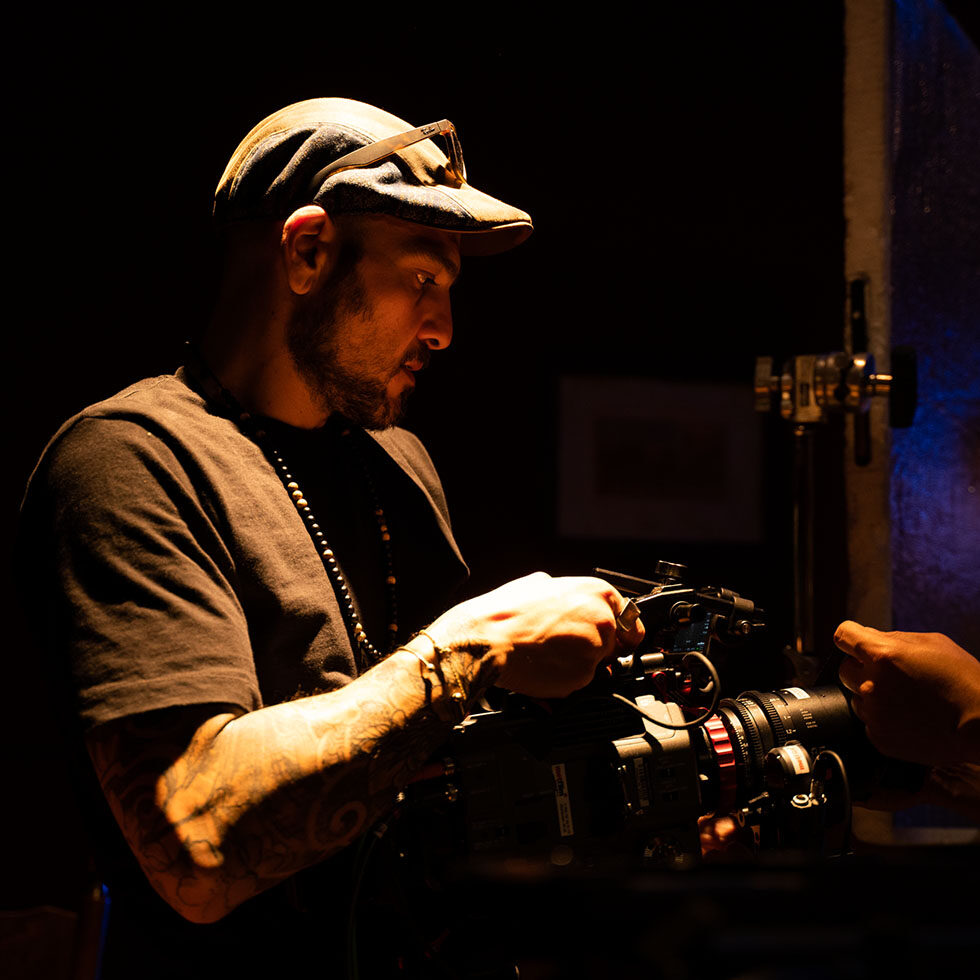
MA Cinematography offers you a unique opportunity to develop the necessary skills and techniques to work professionally within the camera department, employ a range of technical and creative techniques to develop and enhance visual storytelling, and explore a range of film formats and processes.

You are entering an industry transformed by innovative technology and formats, and with growing awareness of diversity, sustainability, progressive workplace practices, and globalisation. The screen industries are experiencing change – and we want you to be a part of this change.

On MA Cinematography, you will study alongside a like-minded group of aspiring industry professionals. Alongside your acquisition of craft skills, you will develop crucial soft skills such as communication, creativity, and teamwork.

Why Take the Course?

Why Take the Course?

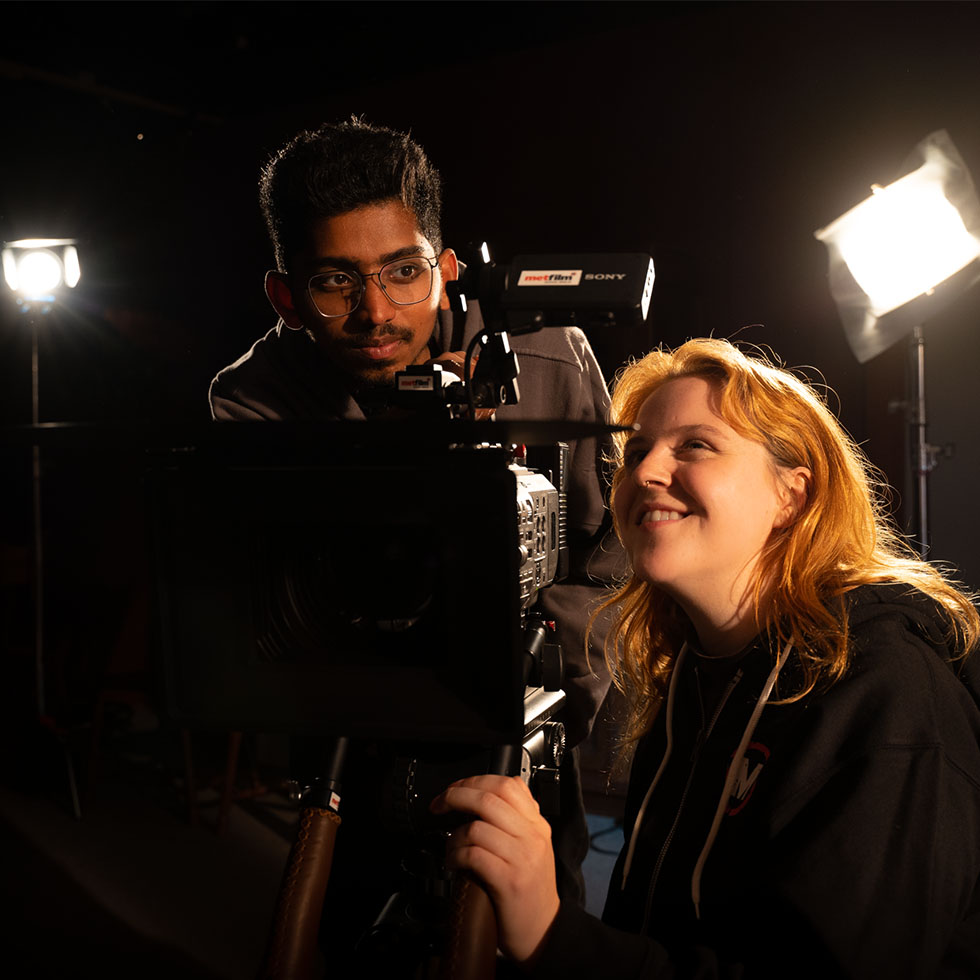
  • Practical: Through hands-on exercises, workshops, seminars, masterclasses, and screenings, students will gain the skills and knowledge required to work with cameras and lighting to industry standards.
  • Comprehensive: Gain skills vital for look, design, and rushes management through creative and technical training in grading and processing software, to enhance the visual aesthetics of student productions.
  • Industry-Facing: Opportunities to gain a wide range of industry-relevant skills across projects including a short, filmed project, 35mm workshop and shooting exercise, and classes on the function of each major camera departmental role.
  • Real-life Experience: Students will get the chance to work as a director of photography alongside other MA pathways on short video content for external clients, providing the opportunity to further highlight their talent.
  • Professional tutors: Many of our teaching staff are currently working in the industry as: TV and film directors, broadcast journalists, producers, writers, and more*.

*For a selection of the tutors who teach across our campuses, please see Our People.

Awarding body: BIMM University

Our outstanding academic credentials are recognised by leading higher education bodies. This course is recognised by ScreenSkills, the industry-led skills body for the UK’s screen-based industries, and carries the ScreenSkills Select quality mark, which indicates courses best suited to prepare students for a career in the screen industries.

Programme Aims

Deep understanding of the roles and responsibilities relating to being a cinematographer for a range of screen platforms.
The ability to interpret and craft creative projects suitable for industry and audiences.
The skills need to deliver content that is of a professional standard and fresh in its approach.
The ability to articulate the role visual screen storytelling plays in contributing positively and progressively to an increasingly globalised and inclusive world.
Developed to high level productive ways of working with directors, producers, and crew in the realisation of compelling and meaningful content.
A detailed, structured, and ethical approach to content production including incorporation of lighting and exposed principles that acknowledge a range of skin tones and other characteristics of inclusive production.
A positive engagement with the use of non-discriminatory language and conventions in relation to role and filming processes.
Understanding of the role of research and intellectual enquiry as an integral part of academic development and professional practice.
The knowledge, skills, and understanding to enable you to develop professionally as a contemporary screen professional.
What You Will Study

What You Will Study

Over three trimesters, you will gain advanced insight into not only the work of a cinematographer, but also into the implications of crafting and delivering screen content to a wide variety of audiences and contexts.

Trimester One focuses on the essential elements of cinematography: camera, light, exposure, and interpretation in a range of circumstances including the film or television studio. Alongside that you will explore your own qualities as you build a career profile that will develop as the course – and your understanding – increases.

In Trimester Two, you will put your understanding into practice through an ambitious production exercise where you will experience the expectations of delivering to a brief with external clients. You will also be given the opportunity to develop your narrative and creative skills through a series of collaborative filming exercises. Alongside this, you will join with students from all disciplines to explore in depth the role of research and the significance of EDI in both your academic and professional development.

In Trimester Three, you will draw together your practical, theoretical, and industry understanding into a final piece, working alongside other MA students on a filmed artefact and complete your career plan as part of your progression into real world employment.

overview
Study_With_Us_Undergraduate_Courses_UK_Further_Requirements_MetFilm_School

Module Overview

Module Overview

The overview below is not a complete list of MA Cinematography modules.

Through seminars and practical exercises, you will explore the essential craft skills required of a modern cinematographer. You will gain a clear understanding of the roles and functions within the camera department and how they operate in today’s screen industries.

You will master the mechanics of lighting and camera movement across various shooting scenarios. By focusing on exposure, depth of field, lens choice, and camera placement, you will learn how to use these technical skills as powerful tools for visual storytelling.

You will explore how film and television work by looking at the relationship between genre, audience, and the industry. By studying how audiences engage with screen content both globally and at home, you will learn how to apply these insights to your own creative projects and use genre to tell more impactful stories.

Working as a Director of Photography (DOP) with production teams from other pathways, you will create a series of videos for external clients. This hands-on module includes specialised sessions on location filming, green screen compositing, and shooting table-top commercials to support your professional output.

You will participate in advanced workshops focusing on sophisticated lighting and camerawork, including inclusive lighting and exposure principles. This module emphasizes the collaborative relationship between the cinematographer, director, and gaffer, while encouraging an inclusive set culture. You will bridge technical and creative principles to develop your own signature style in preparation for a professional career.

You will identify your place in the industry and build a professional portfolio of materials to use immediately upon graduation. By learning core entrepreneurial skills alongside specialist cinematography knowledge, you will develop the tools needed for a long-term career. You will also pitch your Final Major Project, showing how it aligns with your career goals.

You will focus on the preparation and planning of your Final Major Project, applying your specialist skills as a cinematographer to bring the vision to life. This module is largely self-directed, allowing you to explore your creative identity and produce industry-standard prep work under the guidance of a project supervisor.

This final collaborative project is your opportunity to work independently and create a signature piece of work that showcases your development as a cinematographer or DOP. You will deliver creatively exciting, distinctive, and industry-facing work, while refining your career plan to ensure you are ready for the screen industries upon graduation.

Entry Requirements

Entry Requirements

Standard Entry Requirements

  • Age: All applicants must be 18 years or older at the time the programme begins.
  • Education: A 2:2 honours degree from a UK university or overseas equivalent.

Applicants must also submit:

A personal statement of at least 500 words. The MetFilm School online application form details the information that your personal statement must include.

Students Not Meeting Academic Requirements

Students without a degree, but who can demonstrate relevant industry experience or a degree below a 2:2 equivalent are still able to apply. They will need to submit the following:

  • A professional industry reference.
  • A professional CV.
  • A 750 word statement of why you wish to enter the screen industries, indicating the ways in which you think they are changing.

If you meet certain criteria, you may be eligible for a contextual offer with reduced entry requirements.

Find out more about our contextual offers

Students receive the Office 365 and Adobe Creative Cloud License for the duration of their course. For more information, please check Equipment in the Study with Us section for your chosen course, and the Location sections for the range of equipment and learning resources available on each of our campuses.

For more information on MA Cinematography entry requirements, language requirements, funding, and the application process please visit:

Explore

Contact-Us-Generic-block-980-by-980-1