Inside the film industry with MA graduate Guy Trevellyan
By MetFilm School
24 April 2026
We caught up with MetFilm School MA graduate, Guy Trevellyan, who studied MA Producing before progressing into a career on major film and television sets in assistant director and production roles.
Guy has contributed to a range of large-scale projects, including Asteroid City, The Witcher, and Mission: Impossible – Dead Reckoning Part One, gaining experience on some of the industry’s most ambitious sets. He has also founded an independent production company, Nice Guy Pictures. Guy’s award-winning short Plastic Surgery has screened internationally, and his next project, The Act of Learning, is currently in development.
We spoke to Guy about his time at MetFilm School, working on major productions, and how he’s now shaping his own creative path as a filmmaker.
You studied an MA in Producing at MetFilm School. Looking back, how did that experience shape your approach to filmmaking?
Before coming to the MetFilm school, I had no connections or any real prior knowledge of film, only a burning passion to learn and dive headfirst into this world, which from the outside just felt like a dream. My experience at the MetFilm School cemented my love for film, and I knew after day one that this is what I wanted to do for the rest of my life.
MA Producing gave me a great foundation for how a film is made from development through to post-production, learning the tricks of the trade, so to speak. We were able to create a short film (or three in my case, as I couldn’t get enough of it!) for our final assessment, learning how to work in a creative team, collaborating with writers, directors, cinematographers and editors.
Did we make mistakes? Oh yes. But that is all part of learning and building on experience through making mistakes and working out how to fix them as a team. I think the most important aspect of filmmaking I took from my time at the MetFilm School is collaboration. Cinema is a magical world created by a group of extremely talented people across multiple art forms. Once you understand that, you begin to respect, appreciate and work as one, creating something with a unified vision and goal. It’s pure magic.
After graduating from MetFilm School, what were your first steps into the industry, and how did the course help you make that transition?
During my time at the MetFilm School, I started reaching out to production companies, freelance producers and production managers, to gain any experience I could ahead of graduating. This meant that by the time we finished, I was straight onto commercials and music videos across London as a runner.
I then joined a diary service (CallTime) and must have sent over a thousand emails, just to get one email back, which is all you need to get a foot in the door., The email I got was for a small job with Comedy Central, working for a production manager who ended up putting me forward for the UK assistant role to Wes Anderson, and from there, the rest is history. No job is too small, and you don’t know who you will meet along the way. It’s a wild, crazy and magical industry.
You’ve worked on major productions like Asteroid City, The Witcher, and Mission: Impossible – Dead Reckoning Part One. Do you have any career highlights you’d like to share with us?
Asteroid City will always have a special place in my heart. This was an experience of a lifetime to be living out in Spain for four months, meeting these creative titans in the industry, people I have looked up to since I was a kid. Learning from Atilla Yücer (1st AD) in our schedule meetings at 11 pm while prepping how we were going to shoot the next day. I was fortunate enough to work under the late Adam Somner on The Wonderful Story of Henry Sugar. I learned the importance of patience, communication and how to personally connect each layer of film together into a perfect schedule/plan.
I was given control of the B-Cam unit on A Quiet Place: Day One, which was a big step up for me, running my own little unit alongside or sometimes in a completely different location to the main unit. I remember filming the cat sequence, where Frodo struts through apocalyptic New York, and we had to shoot this in various plates for performance safety and VFX.
Learning how to keep calm and communicate clearly with the crew and relay information to the director, Michael Sarnoski, was a dream. I later took this knowledge onto Panic Carefully (Directed by Sam Esmail), where I ended up running the insert unit. This is the first time I was given a chance to direct on a large-scale production and schedule these insert shots/sequences by communicating with all the relevant departments.
I recently worked with the great Danny Boyle on his new film Ink, which was just a joy. This was not an easy schedule, and we were shooting a lot, very quickly, but Danny’s approach was phenomenal. He always had a smile on his face, listened to every crew member and kept a fun, calm atmosphere on set, even in difficult times. I took a lot of inspiration from that experience and how I wanted to act as a director.
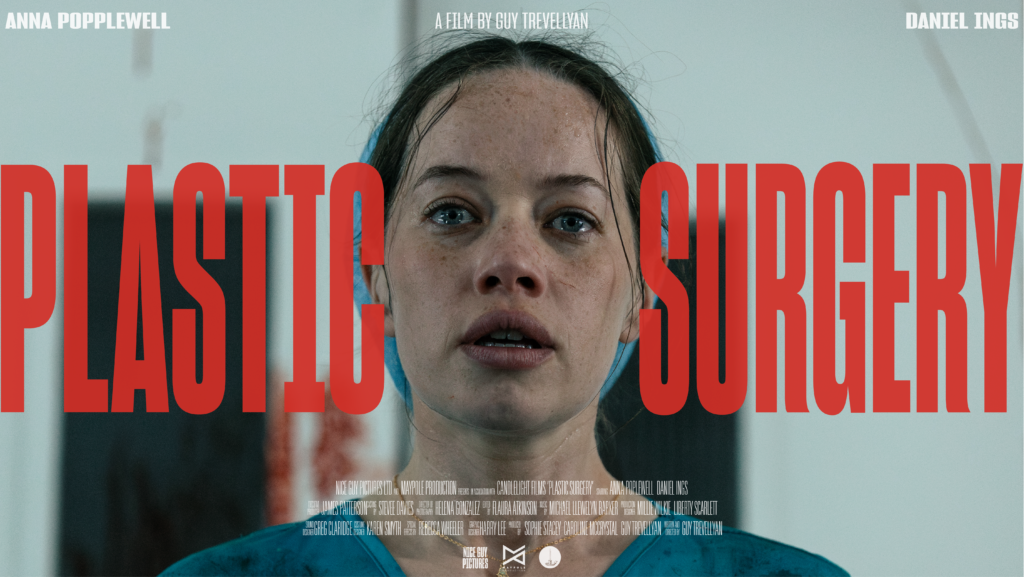
Plastic Surgery is your directorial debut and has already picked up awards internationally. What was the original inspiration behind the film?
The original inspiration for Plastic Surgery came through my sister, who used to work for The Ocean Agency. We made a film for them while I was at the MetFilm School and did our interviews in the classrooms. From this connection, I began to learn more about the effect humans have had on marine life and the world beneath the waves. I was shocked and frankly terrified.
This feeling was only enhanced when I began to learn about plastic pollution, and most will know its effect on our planet, but I had no idea of the true threat it poses to our own health. Learning that microplastics can transfer into our body through the food we eat, the air we breathe, the water we drink and even the clothes we wear. I felt like this was something I had to explore.
I then watched a short film called The Next Floor by none other than Denis Villeneuve, which was a metaphorical short on how Mother Nature cannot keep up with the rate at which humans are consuming the natural world. I realised I had something here and then wrote the first draft of Plastic Surgery during COVID. So, disease and isolation were also heavily on my mind at the time.
Plastic Surgery has screened at festivals around the world. What has that experience been like for you?
The experience has been incredible. I had no idea this film would even get selected for anything, and to be honest, I was just hoping to have a film by the end of the edit! So, this was a bonus for me and what a thrill it’s been.
We premiered the film at the Oscar-qualifying festival Hollyshorts in LA, where it won Best Thriller, and recently won Best Short (horror, thriller, sci-fi) at CineQuest, among others. We are currently halfway through the festival circuit with so many more exciting announcements to make. I think my favourite part of festivals has been meeting like-minded directors and filmmakers who are in the same position as me. Connecting and sharing thoughts, memories and script ideas. It’s just a magical family to be a part of, and it only ignites my passion further to make my feature film next year.
You founded Nice Guy Pictures with a focus on stories about family, belonging, and truth. What motivated you to start your own production company at this stage in your career?
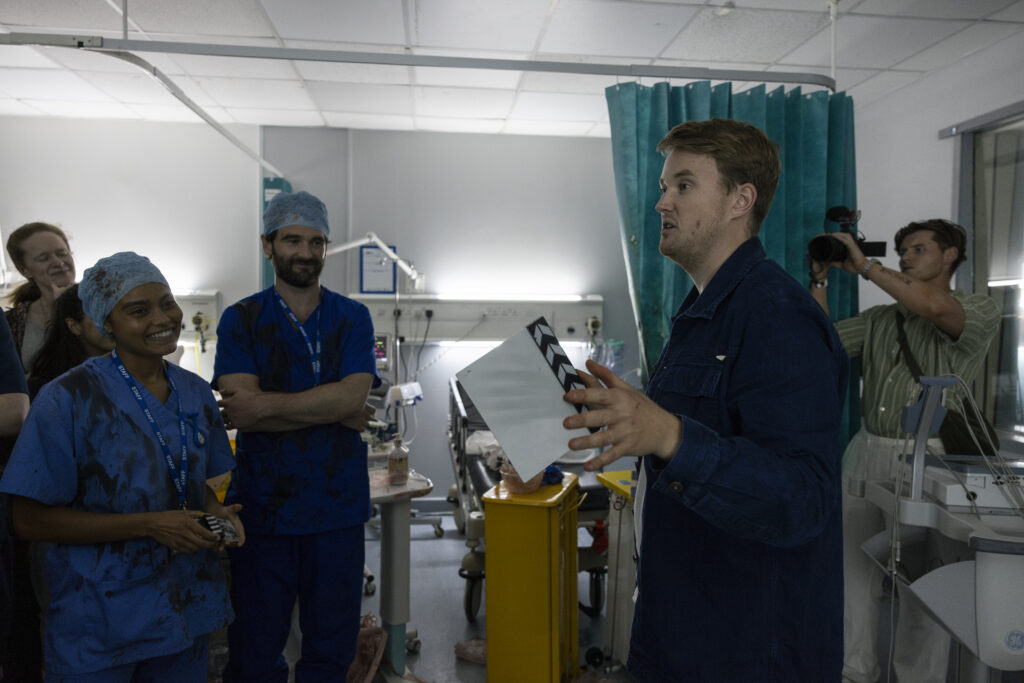
It has been a big dream of mine to start my own production company, so when we finally got the funding to make Plastic Surgery, I used that to launch Nice Guy Pictures. I wanted to focus on stories which blend genre filmmaking with social and human issues, stories which have an environmental message and meaning but are shown through a cinematic, character-driven narrative.
Relatable people thrown into surreal circumstances excite me and removes any limitations to the script. I love to challenge myself on every film or project I do, and after working as an Assistant Director for nearly ten years, I felt like this was the right time to make the leap myself and scratch that creative itch I have inside me.
Your next project, The Act of Learning, is currently in development. What can you share about its themes and direction?
We shot the film a couple of weeks ago, so we are now into post-production. The Act of Learning (TAOL) is a more personal story for me as it examines undiagnosed dyslexia, which I battled with as a kid.
TAOL is a coming-of-age drama and fantasy adventure. The story is all about self-belief, courage, belonging and mentorship, and the teachers who help unlock our hidden potential and destigmatise dyslexia through a cinematic character journey.
We have partnered with some very exciting charities to bring this to life and hope to have the film complete before Dyslexia Awareness Week in October. I am always inspired by the quote from the great Martin Scorsese – “The most personal is the most creative”, and I really dived into that with this script, pulling from a lot of real stories and events which happened in my past. It was an emotional journey for sure.
Looking back on your career so far, what advice do you have for aspiring filmmakers?
If I were to give any advice to aspiring filmmakers, I would say trust in the journey and try not to get impatient if it doesn’t happen straight away. It took me ages, with hundreds or even thousands of emails to get through the door as I didn’t know anyone in the industry. Trust that your time will come, and don’t lose hope in that process. I nearly gave up at one point, especially when you see all your friends doing so well, and you think; why isn’t this happening for me?
No job is too small. Don’t assume that because it’s a little commercial or a short film, you won’t meet someone who can change your entire career. Treat everyone with respect and kindness. I can’t say this enough. People usually hire you because they’ve heard good things about you and trust you as a person – not just because you’ve worked on a big-name project like a Marvel film.
Reputation is worth a lot in this business, so try to build on that. Help others and give people a platform to offer ideas and collaborate, value opinions and listen. Remember that this industry is built around passion; we don’t go into this looking for money, so keep that fire alive within you. Don’t feel like you can’t ask for help – it might surprise you how many people have needed it at some point, especially in the film industry.
Plastic Surgery is having a special screening at Everyman at The Whiteley on 10 June 2026, followed by a live Q&A with Guy Trevellyan.
Inspired by Guy’s story?
Discover our MA Producing and advance your career as a producer. Come to an Open Day and meet our industry-active lecturers, and find out how you can gain real on-set experience while you study.